

Kappei’s Diary: My First Day in Japan

Momo-sensei

Kappei
Momo-sensei
Kappei
Momo-sensei
Kappei
Momo-sensei
Kappei
Tatami is "Flooring," not just a Rug
When explaining Tatami to people outside of Japan, it’s often compared to a "carpet" or "rug" because that’s the easiest way to visualize it.
However, in Japan, Tatami is actually a primary flooring material. It is engineered for extreme durability, often designed to last 40 to 50 years with proper care.
The Structure of Tatami
A Tatami mat consists of three main components: "Tatami-omote," "Tatami-beri," and "Tatami-doko."
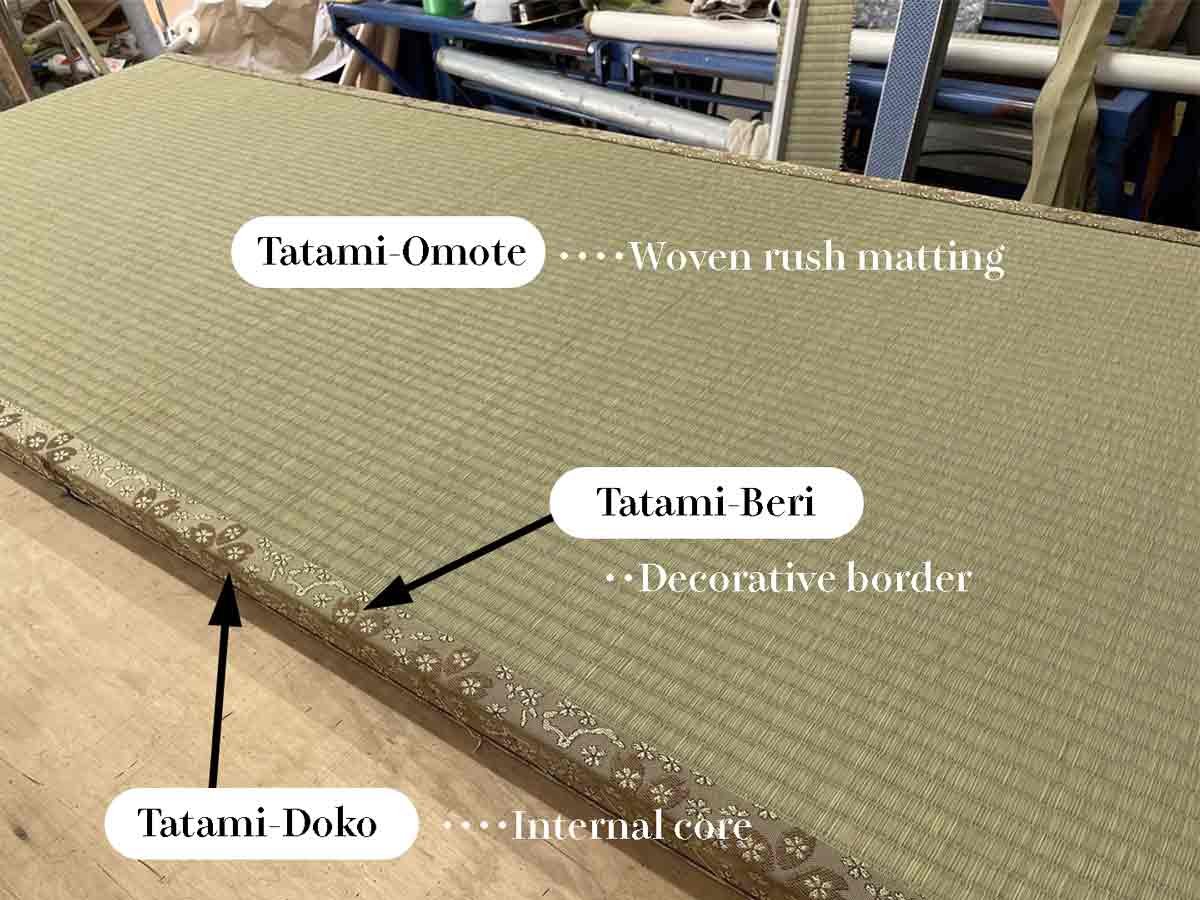
Diagram: Basic structure and components of Tatami
1. Tatami-omote (Surface)
The surface is woven from a plant called "Igusa" (Rush grass). Most are grown in Kumamoto, Japan. It goes through a special "Mud-dying" process to achieve its beautiful color and signature scent.
2. Tatami-beri (Border)
The fabric that protects the edges. These come in over 50 designs, ranging from traditional hemp to modern polyester.
3. Tatami-doko (Core)
The inner core. Historically made of rice straw, modern mats often use lightweight insulation boards. A traditional mat is 5.5cm thick and can weigh over 20kg.
Kappei
Momo-sensei
Kappei
Momo-sensei
Kappei
Momo-sensei