
Japanese Artisans Don't Consider 'Amazon Tatami' to be Real Tatami
February 15, 2026
Hello. Today, I will explain the differences between authentic Japanese tatami and the tatami you often see on international online shops.
There are three major differences:
- Materials
- Design Philosophy
- Mass-produced vs. Handcrafted
1. Materials
Tatami sold on online shops often uses polyethylene. Polyethylene is a synthetic fiber cushion that feels soft when you grip it.
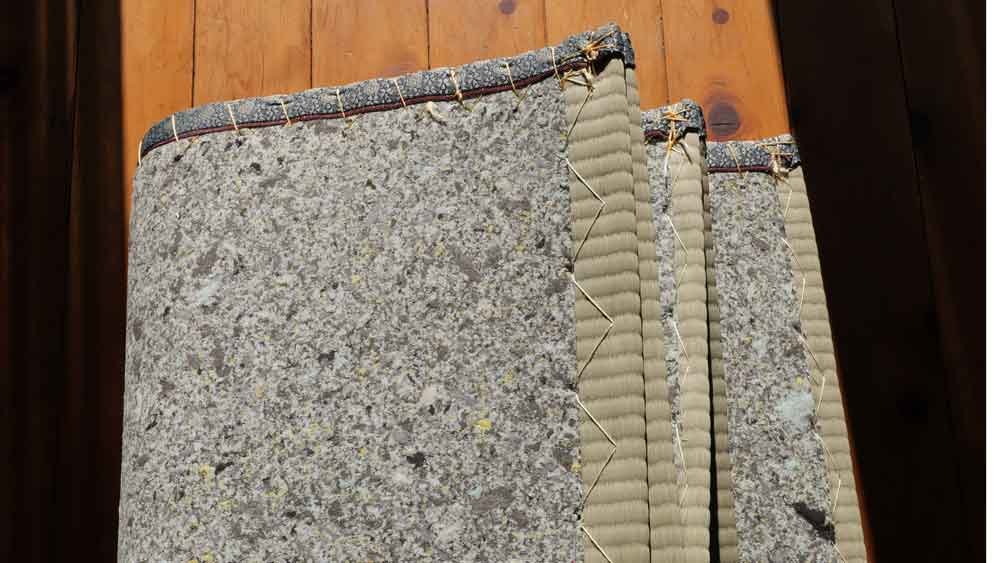
In contrast, authentic tatami is traditionally made from a base of compressed rice straw. This creates the perfect hardness—not too soft, not too hard. Today, the mainstream material is insulation board made from wood chips, which is used to achieve lightweight portability while maintaining durability.
2. Design Philosophy
Authentic tatami is designed to be used for 20 to 30 years. This is why Japanese artisans dislike calling polyethylene products "tatami." Such products become disposable after a few years as the core loses its resilience. On the other hand, Japanese tatami can be used for decades by simply replacing the surface layer (the omote).
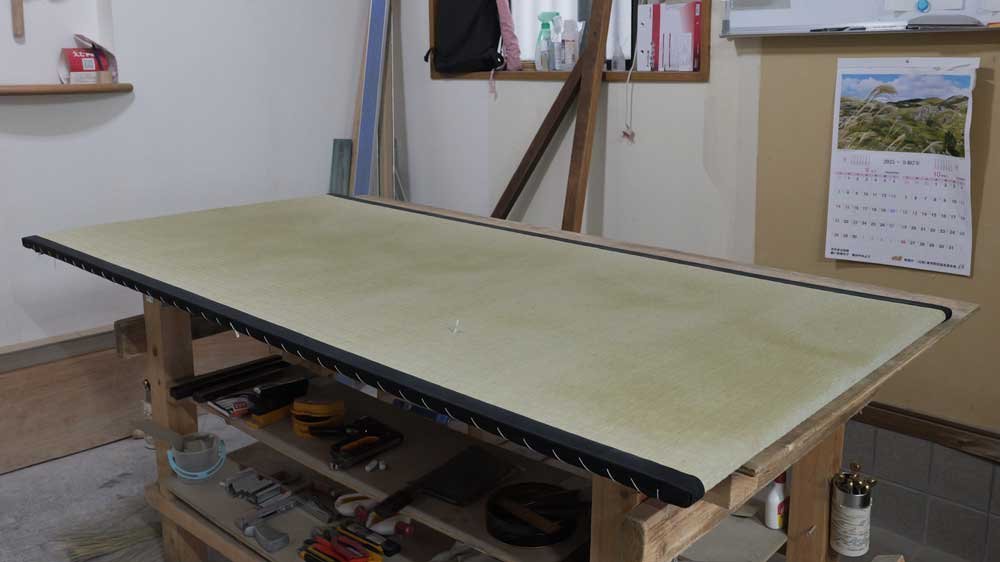
The surface layer you see is woven from a plant called igusa (rush grass). When it starts to look aged, you can ask an artisan to remove the tatami-omote, flip it over, and sew it back on. Later, when it looks old again, you call an artisan to your home to install a brand-new tatami-omote.
As long as the core remains intact, tatami is an eco-friendly, nature-derived product that lasts a lifetime.
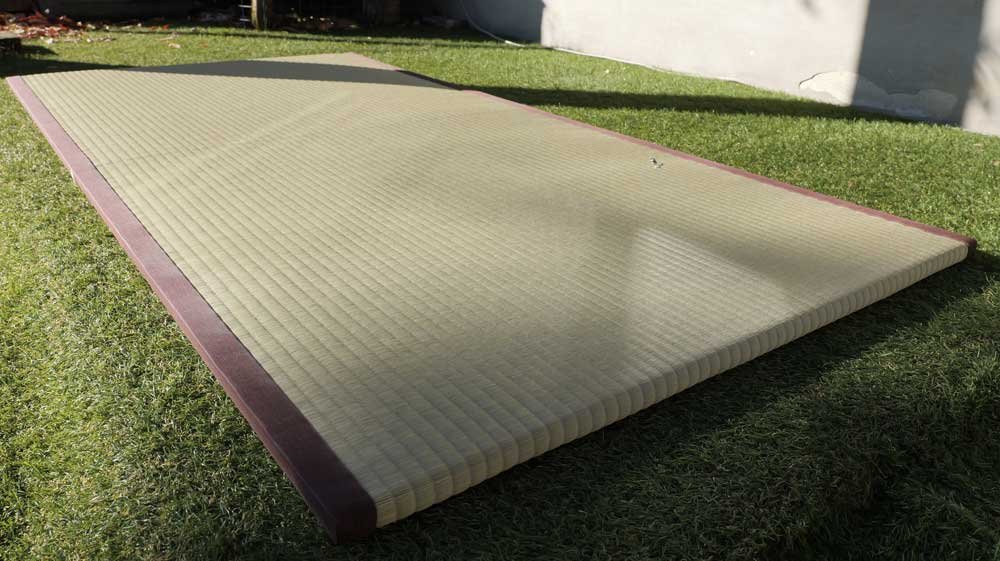
For international markets, we also offer tatami made from washi (Japanese paper). While it is paper, it is more resistant to fading than igusa and offers higher maintainability.
3. Mass-produced by Machines
Real tatami is fully customized to fit the specific size of each room. We can also create them to your exact specifications. Conversely, products on online shops are sold in fixed sizes. This allows for mass production and cost-cutting.
The artisan's difference is most visible in:
(1) The technique of tensioning the tatami-omote
Artisans feel the slight looseness and individual differences of the core material through their fingertips while hand-sewing, adjusting the tension of each stitch.
This ensures the floor remains perfectly flat without uneven bumps, maintaining a taut and beautiful surface for years to come.
(2) Commitment to the corners
Tatami without perfectly 90-degree corners looks unsightly. The precision of these corners is where the artisan’s dedication truly shows.